Digestive enzymes vs probiotics vs prebiotics: what each one does
Digestive enzymes, probiotics and prebiotics sound alike and are often sold side by side, yet they do three completely different jobs. Enzymes break your food down, probiotics are the good bacteria themselves, and prebiotics are the fibre that feeds those bacteria. Here is a plain-English guide to what each one does, and how they fit into an everyday Malaysian routine.
- Digestive enzymes break food into smaller pieces your body can actually absorb.
- Probiotics are the live beneficial bacteria already living in your gut.
- Prebiotics are special fibres, such as inulin, that feed those good bacteria.
- The three work as a team: break the food down, keep the good bacteria populated, and keep them fed.
- Food comes first, and persistent or painful symptoms belong with a doctor, not a supplement.
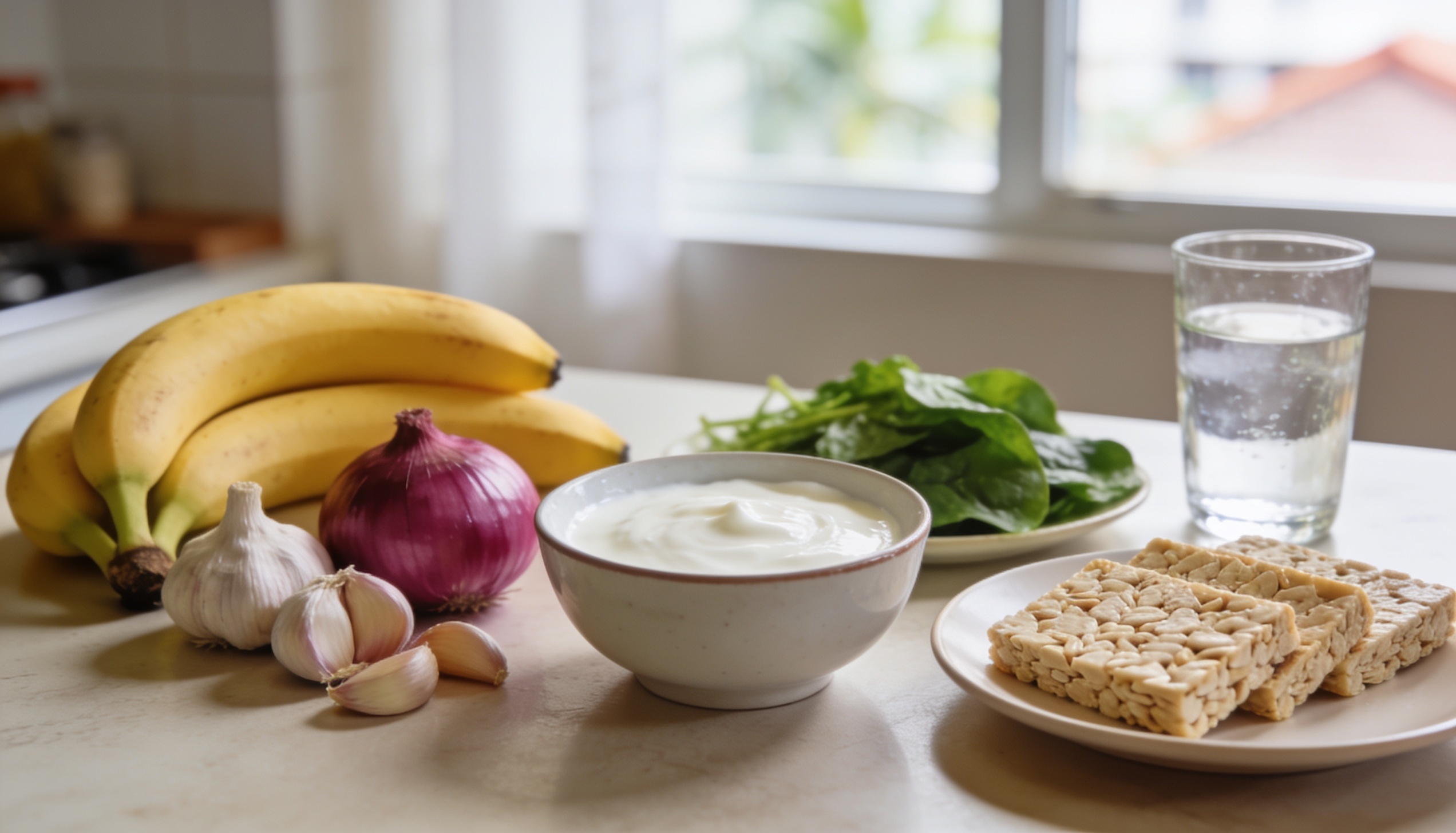
The short answer: three jobs, one digestive system
The simplest way to keep them straight is to picture a kitchen. Digestive enzymes are the knives that cut food into pieces small enough to use. Probiotics are the staff who live and work in that kitchen. Prebiotics are the ingredients that keep the staff fed and working well. All three help support digestion, but each has its own role, and none of them replaces the others.
Digestive enzymes: they break your food down
Digestive enzymes are proteins that break food into nutrients small enough to absorb. Amylase works on carbohydrates, protease on protein, and lipase on fats. Your body produces these naturally in the mouth, stomach and small intestine, although production can be affected by age, stress and simply eating too quickly. Some everyday foods carry natural enzymes too, such as the bromelain in pineapple and the papain in papaya, both easy to find at any Malaysian market.
This is why two people can eat the same nasi campur and feel completely different afterwards. When food is broken down properly, more of its value is available for your body to absorb, which is where a daily enzyme complex sometimes comes in as part of a routine.
Probiotics: the living good bacteria
Probiotics are the live beneficial bacteria that already live in your gut, numbering in the trillions. They help with digestion and overall balance, and you top them up mainly through fermented foods. Malaysian and regional kitchens are full of them, from tempeh and yogurt to kimchi, miso and tapai. Adding a small serving of a fermented food to your meals is a simple, natural way to support your gut community without thinking about supplements at all.
One point worth clearing up: a probiotic is a bacteria, not a fibre. That is the main thing that separates it from a prebiotic, which people often mix up because the words look so similar.
Prebiotics: food for your good bacteria
Prebiotics are types of fibre your body cannot digest, but your gut bacteria can. In other words, they are the food that keeps your good bacteria fed and active. Inulin is one of the most common prebiotic fibres, and it is found naturally in onions, garlic, leeks and bananas, all staples in local cooking. When you eat these regularly, you are quietly feeding the very bacteria that help your digestion run smoothly.
Because prebiotics and probiotics work as a pair, some people describe them as feeding and populating the gut together. A diet with plenty of colourful plants tends to cover both without much effort.
How the three work together in a day
Across a normal day, the three take turns rather than compete. When you eat, enzymes go first and break the meal down into absorbable pieces. As that food moves through, your probiotic bacteria help process what is left. The prebiotic fibre you eat then feeds those bacteria so the community stays healthy for the next meal. Miss out on fibre for days on end and the bacteria have less to work with, which is one reason a fibre-light diet can leave digestion feeling sluggish.
You can see the same teamwork in how BEYON builds its products. FLEX+ includes the DigeZyme enzyme complex to help support digestion during the day, while its Calcium Lactate leans on good absorption to be useful, a theme we cover in our guide to gut balance and nutrient absorption. MoonFit, the night-time formula, includes Inulin, a prebiotic fibre, as part of its overnight support.
Everyday habits that help support digestion
Before reaching for any supplement, a few habits do a lot of the work. Eat a variety of colourful plants so you naturally get prebiotic fibre. Include a fermented food now and then for probiotics. Chew slowly and keep portions moderate so your enzymes are not overwhelmed by a rushed, oversized meal. Drink water through the day, which matters even more in Malaysia's heat. If you do add a food supplement to help support digestion, take it at the same time each day so it becomes a genuine habit rather than an occasional afterthought.
Frequently asked questions
Digestive enzymes break food down into nutrients your body can absorb. Probiotics are the live beneficial bacteria that live in your gut. Prebiotics are special fibres, such as inulin, that feed those good bacteria. Three different jobs, working as a team.
Not necessarily. A varied diet with enough fibre and some fermented foods already supplies natural enzymes, probiotics and prebiotics. Some people add a daily supplement to help support digestion on top of their meals, but food comes first.
Inulin is a prebiotic. It is a type of fibre your body cannot digest but your gut bacteria can, so it acts as food for the good bacteria rather than being a bacteria itself. It is found naturally in onions, garlic, leeks and bananas.
See a doctor if digestive discomfort is painful, persistent, or comes with weight loss, changes in bowel habits or blood in the stool. Everyday comfort tips and food supplements are not a substitute for medical care.
This article is for general wellness information only and is not medical advice. BEYON supplements are classified as food (uncontrolled) by KKM and are not intended to diagnose, treat, cure or prevent any disease.
Daytime digestion & gut support
FLEX+ combines Botanical Peach Powder, Calcium Lactate and the DigeZyme® enzyme complex to help support digestion, gut balance and nutrient absorption through the day.
Discover FLEX+